

You’re Not the Same Person Every Week: Understanding the 4 Phases of Your Cycle
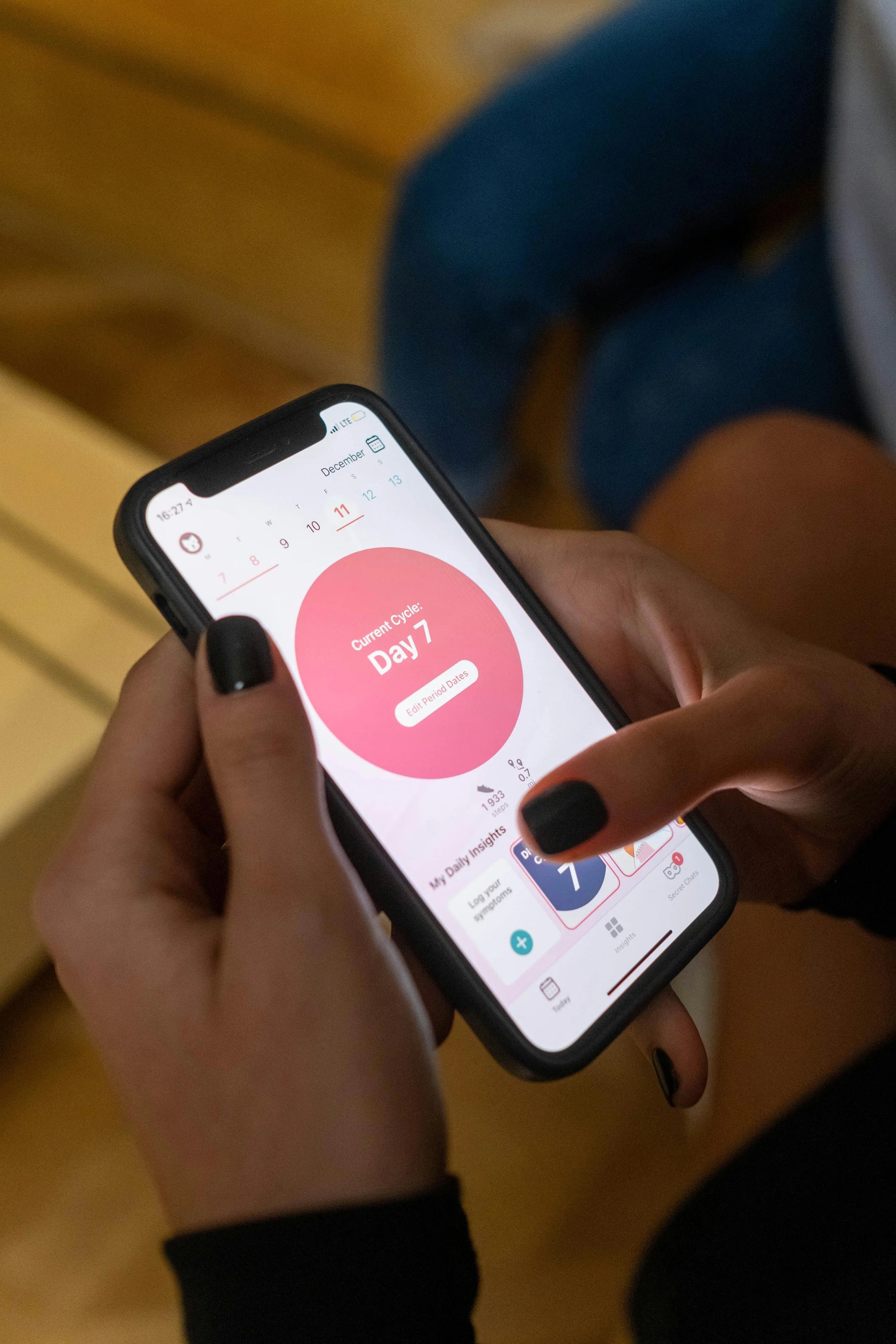
One of the biggest shifts that happens when you begin learning about your menstrual cycle is realising that you are not supposed to feel exactly the same all the time.
You’re not the same person every week, and that’s okay. Actually, it’s scientifically proven.
Let’s deep dive into the four phases of the menstrual cycle, how they affect you and how you can best support yourself.
Introduction
One of the biggest shifts that happens when you begin learning about your menstrual cycle is realising that you are not supposed to feel exactly the same all the time.
Sometimes you may not feel like the same person from one day to the next. While that can feel confusing, frustrating or even a bit daunting when you don’t know what is happening, it can also become deeply empowering when you begin to see the pattern.
Your body isn’t random – it’s in a carefully curated rhythm governed by at least 44 different hormones.
The menstrual cycle is a natural, reoccurring process that prepares the body for potential pregnancy, but it also affects a lot more than reproduction. A typical cycle is often described as lasting around 25–36 days, although variation exists, and the cycle is commonly divided into four phases: menstruation, follicular, ovulation and luteal.
These phases are not rigid boxes, and everyone’s rhythm is different.
Some people feel:
Amazing during ovulation, whereas others feel anxious and overstimulated
Relief when bleeding starts, others feel grief, pain or exhaustion
Low, irritable and stretched during luteal, some feel productive and focused
High energy and free-spirited during follicular, others feel a hangover from menstruation
In addition, some people don’t bleed at all because of contraception, hormones, surgery, pregnancy, perimenopause or menopause. However, they can still notice cyclical or hormonal patterns in mood, energy, pain, identity or capacity.
It’s not a rule book, but it is the map we should have all been given a long time ago.
Firstly - hormones are not your enemy
We often use the word “hormonal” as an insult, especially towards women.
But actually, hormones are not a flaw in your system – they are the system.
Our bodies produce at least 44 hormones, and without them we would not be alive. In menstrual cycle education, we tend to focus on four key hormones:
Estrogen: Builds the uterine lining and supports ovulation
Progesterone: Rises after ovulation to support the womb lining, then drops before bleeding
Follicle-stimulating hormone: Supports egg development
Luteinising hormone: Triggers ovulation
However, household names like serotonin, melatonin, cortisol, insulin and adrenaline all interact with the cycle too.
Nobody is expected to memorise and understand every hormone. Rather, understand these are chemical messengers that change across the menstrual cycle and those changes can influence the body, brain, nervous system, mood, sleep, appetite, focus, pain, confidence and social energy.
The cycle also starts in the brain. The hypothalamic-pituitary-gonadal (HPG) axis is the communication system between the brain and reproductive organs. The brain produces hormones that signal to the ovaries, which then produce oestrogen and progesterone.
So if you are affected by burnout, poor sleep, high stress, trauma, illness or big life changes, that is not just “in your head” – your brain and body are constantly communicating.
Phase 1: Menstruation
AKA: Inner Winter
Menstruation begins on day one of bleeding.
This is when the womb lining sheds, and hormone levels are generally low. In seasonal cycle language, this is often called inner winter because it is a time of release, retreat and reset.
This is the phase many of us have been taught to see as inconvenient, embarrassing, messy or something to hide. We have all grown up with that narrative - periods are framed as annoying, painful, gross, shameful or disruptive and we hide our tampons on the way to the bathroom.
But menstruation offers you a lot of information, to the point that there is now a strong clinical argument for the menstrual cycle being treated as a vital sign for health.
It can tell us how the previous cycle landed, it can show us what our body needs, and it always reveals whether we are pushing beyond capacity.
At this time you may notice:
Lower energy, fatigue and headaches
Pelvic heaviness, cramps, back pain, looser stools
Increased need for sleep
A desire for warmth and rest
Tender, reflective or relieved
Irritable, low or disconnected
Out-put tasks feel harder
Reflection, reviewing and quiet work feels more accessible
For neurodiverse people, menstruation can sometimes amplify sensory sensitivity, overwhelm, executive dysfunction or shutdown, especially if pain, fatigue, bleeding logistics and emotional load all arrive together.
For people with endometriosis, adenomyosis, fibroids or heavy bleeding, this phase may be much more than “a period” – it can be completely debilitating.
How to support yourself:
Reduce unnecessary demand.
That might mean heat, pain support, nourishing food, looser clothing, lower-impact movement, more privacy, fewer social obligations, earlier nights or allowing yourself to do the minimum where possible.
Phase 2: Follicular
AKA: Inner Spring
After menstruation, the follicular phase begins.
Estrogen starts to rise as the body prepares for ovulation. In seasonal language, this is often called inner spring because it is a build-up phase where energy, motivation and curiosity may begin to return.
It can be a time of feeling more optimistic, motivated, creative, playful and open to possibility.
At this time you may notice:
Energy lifting, lighter body sensation
Improved stamina, or a desire to move around more
Clearer thinking, planning and learning
Starting new projects and getting creative
More hopeful, tolerant or open
More socially available and outgoing
But this phase can also be vulnerable, because coming out of menstruation does not mean you need to launch yourself immediately back into full-speed life (although it’s very tempting!).
The challenge in this phase is to hold your vulnerability and enthusiasm in a very chaotic culture.
Sometimes this phase can bring a welcome lift in focus or motivation, but it can also trigger overcommitting because things suddenly feel possible again. If you’re recovering from burnout, chronic illness or endometriosis flares, follicular energy may be there, but recovery may still be incomplete.
How to support yourself:
Pace the return.
It can be a good time for ideas, learning, gentle strength-building, planning and reconnecting with things that feel interesting. But it is also a time to avoid mistaking a bit more capacity for unlimited capacity, because that will impact you further along the cycle.
Phase 3: Ovulation
AKA: Inner Summer
Ovulation is the point where an egg is released from the ovary and three of the major cycle hormones all peak around this time.
This is often described as inner summer because many experience more confidence, energy, communication, pleasure, social ease, productivity and self-expression. It’s a peak moment where you might feel more attractive, extroverted and active.
But this is where nuance matters.
Whilst you may notice the positive affects and feel brilliant, some people feel:
Anxious and overstimulated
Impulsive and ungrounded
Ovulation pain which can bring migraines, digestive symptoms and fatigue
Emotional intensity
For people with endometriosis or pelvic pain, ovulation can be a significant flare point. I’ve also had quite a few neurodiverse clients who find that whilst the combination of higher energy, confidence and impulsivity may be useful, it’s tempting to lean into overbooking, overspending, overcommitting or taking on too much.
This is also where the transition into luteal becomes important. Some people feel a very real “drop” after ovulation. If they have spent ovulation doing everything - intense exercise, social plans, long travel, big decisions, late nights (we’ve all done it!) then the shift into luteal can feel like hitting a wall.
How to support yourself:
Enjoy the energy without spending all of it.
It can be a good time for conversations, connection, creative output, visibility, sex, movement, presentations at work or socialising, but it’s important to build in grounding and recovery too.
Phase 4: Luteal
AKA: Inner Autumn
After ovulation, the luteal phase begins.
Luteal is the most misunderstood and mismanaged phase - it’s where PMS and PMDD can accelerate if not handled in a tailored, supportive way.
But it’s very powerful when understood properly.
You may notice the following coming up:
Bloating, breast tenderness and constipation
Headaches, fatigue and disrupted sleep
Acne, cravings and pain flare ups
More irritable, sensitive or low mood
Foggier, less tolerant and sharper inner critic
However, it is an opportunity to become more discerning, honest and able to see what is not working because if you’re not okay, luteal will reveal it and show you the cost of pushing through.
This is why I often describe luteal as the phase that asks: how are you really?
This phase can be beautiful if you embrace it. It can offer you insight, heightened intuition, truth-speaking, discernment, saying no and coming home to yourself. It’s where the neglected, overridden or wounded parts of us come through – which is often why we feel vulnerable, fragile and tired.
How to support yourself:
Reduce load and don’t blame yourself.
This may mean simpler meals, more sleep, fewer social plans, gentler movement, clearer boundaries, reduced alcohol, blood sugar support, lowering expectations, naming your needs earlier and creating systems before the hardest days arrive.
Please note: Luteal distress should not be dismissed as “just hormones”, especially if it includes suicidal thoughts, self-harm urges, panic, severe depression or life-disrupting rage. If you are experiencing any of these, please seek professional support immediately.
So what do we do with this information?
Cycle awareness is not about becoming perfectly aligned all the time.
Nobody lives in a vacuum. We are shaped by the systems we operate in, and even as somebody that lives and breathes this work – my cycle is not perfect.
Most of us have jobs, caring responsibilities, deadlines, bills, relationships, grief, illness, trauma and everything, everywhere – happening all at once.
So the point isn’t adding “controlling” your cycle to your never-ending to-do list, it’s simply understanding your body well enough to support it. Something we all should have been taught from the get go – but never were.
The simplest first step is to start tracking your cycle
Cycle-tracking is said to perhaps be one of the oldest forms of record keeping, with evidence of lunar calendars etched into ancient bones.
It’s so simple, yet really effective - which is why it’s stood the test of time.
Cycle-tracking involves monitoring aspects of your body, health and lifestyle day-to-day to better understand your natural rhythm. It can support menstrual health, fertility, energy, mental wellbeing and wider health, and can be done through an app, written tracker or journalling.
You might begin by tracking your cycle day, bleed, mood, energy, pain, sleep, digestion, stress, social capacity and any notes about what was happening in life. In my experience of doing this myself and delivering this work – you’ll see the patterns very quickly and it might surprise you.
Conclusion
If you are struggling, you’re not just randomly failing at adulting.
Instead, it’s actually very possible that your body has been giving you the same message every month.
That’s the power of tracking and mapping – because you can then make adjustments to better support yourself. Even really small changes can have a positive knock-on affect.
Remember that you’re absolutely allowed to change across the month – because biologically, that is what’s happening. You’re allowed to want and need different things, and you’re allowed to stop forcing yourself to be the same version of productive, social, calm and available every day.
Your cycle is not the whole story, but it might be a missing part of it.
And once you can see the pattern, you can begin to work with your body rather than against it.
If you want a chat about your cycle, or recognise the importance of ensuring everyone has access to this information and support – please do get in touch, I’d love to chat to you about it.
Explore my work:
hello@flowwithpaige.com
