Menstrual Health in the Mainstream
At a glance:
Menstrual health is moving beyond awareness into development and adoption, as workplaces, healthcare, research and culture begin building systems and practices around it.
The luteal phase has gone mainstream, bringing greater body literacy alongside new questions about commercialisation, algorithms, productivity and ownership.
Menstrual health is increasingly being adopted at work — even in the British Army, challenging the idea that support is only possible in unusually flexible workplaces.
Endometriosis is no longer the only condition breaking through: PMDD, PMOS and adenomyosis are gaining greater public and institutional recognition.
Menstrual blood is becoming scientifically and potentially commercially valuable, raising important questions about consent, ownership, governance and who benefits.
Pain is becoming a systems issue, not simply a question of whether women are believed, with hysteroscopy highlighting how institutional language can normalise significant embodied experiences.
“There is something slightly bittersweet about institutions becoming increasingly interested in what menstrual bodies can give us while people living in those bodies still struggle for timely diagnoses, adequate treatment and meaningful participation in decisions about their health.”
- Paige Hughes
Introduction
So… things are getting interesting.
I started Menstrual Health in the Mainstream because I wanted somewhere to keep track of where menstrual health was showing up outside the spaces you would traditionally expect to find it. In politics, workplaces, television, technology, research, social media and culture.
This is because by both working in menstrual health, and being somebody who menstruates myself, I’m fascinated not just by menstrual health as a subject – but as a lens by which to look at so many other things.
What happens around bodies that bleed tells us a great deal about what society values, what it ignores and, eventually, what it decides is worth changing.
And this summer, there has been a lot to look at.
For years, much of the menstrual health movement was understandably focused on visibility: talk about periods, break the taboo, believe women's pain, improve product access and teach people that conditions like endometriosis exist. We absolutely still need all of that.
But menstrual health is now mainstream enough that something else is happening - it is moving from awareness into development and adoption.
We see workplaces starting to build systems around it, and medical institutions producing guidance we’ve wanted for years. Researchers are investing more into it and importantly – people are developing new language for their bodies which they can carry into healthcare, politics and work. But, equally, in news that surprises no-one – companies are increasingly commercialising it.
So, whilst we see progress, it also means that menstrual health is acquiring a level of complexity that it couldn't really have while we were still arguing about whether it deserved attention in the first place.
On that note, let’s unpack what has been happening this summer.
1. Menstrual health has gone to work - including in the Army
One of the stories that caught my attention most this summer came from the British Army. ITV News spoke to Lance Bombardier Annie Robertson, who lives with endometriosis, adenomyosis and PMOS.
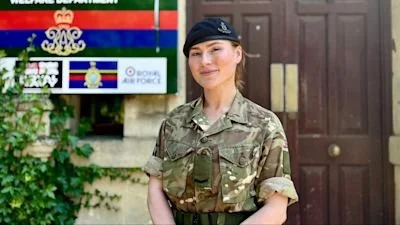
Robertson described the impact her health has had on her military career, including medical downgrading, being unable to deploy during treatment and falling behind with promotion. She has since begun delivering awareness workshops and advocating for other servicewomen.
Pictured: Lance Bombardier Annie Robertson, who has spoken publicly about living with endometriosis, adenomyosis and PMOS. Image: ITV News.
Separately, Staff Sergeant Jodi Stickland has been delivering menopause-awareness sessions across the Armed Forces, while the Army says it now has specific women's-health policies, resources and a Servicewomen's Health Improvement Focus Team.
Whatever your wider view of the military as an institution, I think this is worth paying attention to because it is an unusually difficult workplace in which to accommodate fluctuating health. In the Army – physical capability, medical grading and deployment create an environment in which people who menstruate cannot simply work from home during a severe flare-up.
That makes menstrual health support harder to design, not easier. Yet… it is being designed.
Good to know:
Menstrual health at work is increasingly moving beyond the territory of “nice wellbeing initiative”. If the Army can begin implementing menstrual health initiatives within its significant operational constraints, the argument that menstrual health is simply too complicated for ordinary workplaces becomes harder to sustain.
2. The luteal phase has entered the chat
The luteal phase is having quite the cultural moment.
In July, The Guardian reported on the rise in online discussion about the phase between ovulation and menstruation, with Google searches for “luteal phase” increasing by around 300% over five years. TikTok is now full of luteal meals, workouts, routines, memes and relationship advice. Then came the “luteal uglies”, another viral phrase referring to feeling less attractive, sociable or generally yourself before your period. The BBC has also reported on menstrual language including “cycle syncing” and “going luteal” becoming increasingly normal vocabulary among younger women.
On one hand, I think this is a step in the right direction.

Most of us have been taught surprisingly little about the bodies we spend our entire lives inside. Body literacy can give us enough information, education and tools to understand our bodies, notice what changes and make decisions accordingly.
Pictured: A woman with brown curly hair, cuddled up in bed with a cup of tea. Source: ITV News.
But as menstrual language becomes culturally valuable, it also becomes commercially and politically useful. The same reporting has explored cycle language appearing within the wellness economy, productivity culture, pronatalist politics and parts of the US MAHA movement. Suddenly, your luteal phase can sell you a supplement, a meal plan, an app, a workout or an entire theory about how you should organise your life.
Technology, tracking and data can all help us understand ourselves, but there is a difference between using a tool and allowing it to become another authority over the body. Body literacy should give us more autonomy, not replace one set of rules with an algorithm telling us how to eat, work or behave. And I am particularly wary of cycle awareness becoming another route back to productivity optimisation. We do not need to understand our bodies better simply so we can extract more work from them.
Good to know:
Knowing more about the menstrual cycle is not automatically liberating; what matters is what we do with that knowledge, who interprets it and whether it ultimately gives people greater autonomy over their own bodies. I have a feeling I will be coming back to this one.
3. Menstrual blood is becoming increasingly valuable
This is probably the story I have thought about most.
In August, researchers at the Universities of Bristol and Exeter announced CycleTrack, which aims to create one of the world's largest menstrual-fluid biobanks. Thousands of participants will provide samples across three menstrual cycles alongside symptom tracking, questionnaires and existing health and genetic data, with the aim of better understanding heavy menstrual bleeding and identifying biological signals associated with menstrual variation and related conditions.
This is genuinely exciting research. Menstrual blood has historically been something people are taught to hide, contain and discard - now researchers are asking what information it might hold.
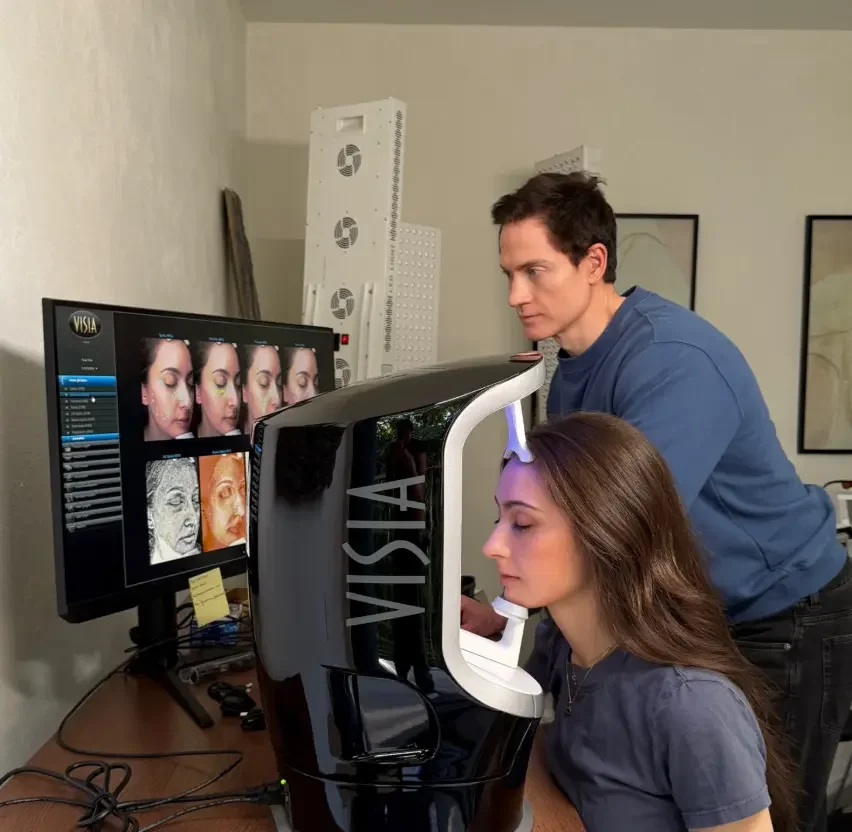
At almost exactly the same cultural moment, it has also appeared in a very different space. The Guardian reported on longevity entrepreneur Bryan Johnson and his partner Kate Tolo storing and investigating Tolo's menstrual blood as part of their interest in women's health and longevity.
Pictured: Bryan Johnson and his Partner, Kate Tolo. Source: New York Post.
Academic biomedical research and private biohacking are clearly not the same thing, and I am not suggesting they are. What interests me is that two very different worlds have looked at menstrual blood and decided there may be value in it.
That raises questions worth asking early…
Who owns biological samples and the information generated from them? How is consent managed if research later leads to commercially valuable discoveries? Who benefits from innovation, and how are the people whose bodies provide the material involved in deciding where it goes next?
I don't think raising those questions undermines the research - quite the opposite. Good governance is part of good research.
There is something slightly bittersweet about institutions becoming increasingly interested in what menstrual bodies can give us while people living in those bodies still struggle for timely diagnoses, adequate treatment and meaningful participation in decisions about their health.
Research may be an important part of changing that - I very much hope it is.
Good to know:
There is also a cultural layer that shouldn't be dismissed. Menstrual blood did not suddenly become meaningful because modern science discovered measurable information inside it. Across human history, menstruation has carried hugely varied cultural and spiritual meanings: taboo and restriction in some traditions, but also transition, power, ritual and sacredness in others.
4. It’s not just about Endometriosis anymore
While endometriosis has become much more visible in the mainstream, other conditions are beginning to step into the spotlight too – as they should.
This summer NICE has been developing the first UK-specific guidance for PMOS* covering investigation, treatment and long-term health risks. Adenomyosis has received dedicated television coverage, with women speaking publicly about severe pain, delayed diagnosis and dismissal.
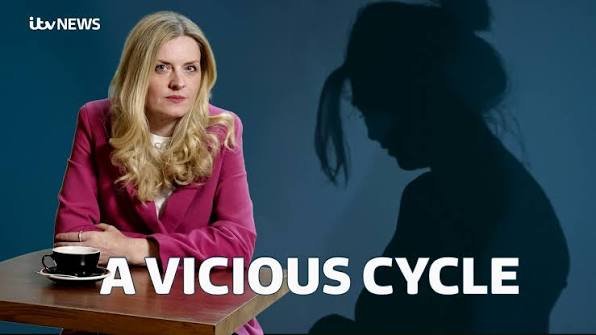
And in August, ITV journalist Claire McGlasson fronted PMDD: A Vicious Cycle, investigating premenstrual dysphoric disorder and the difficulties people face accessing recognition and treatment.
Pictured: Claire McGlasson. Source: ITV News.
PMDD is also appearing in books, mainstream journalism and online communities, including recent debate around people experimenting with antihistamines for their use as a PMDD treatment.
I find this combination important because it shows that these conditions are moving beyond specialist clinics and patient forums and into ordinary cultural language.
… and words matter enormously in health.
Because language won’t give us treatment, but it gives us something to notice, describe, research and take into a medical appointment. It allows communities to form around experiences that previously felt private and inexplicable, compare symptoms and even experiment with treatments.
Good to know:
Whilst unsupported health claims online need challenging, I’m not quick to write off everything online as “misinformation” and judge the individuals speaking about it. Instead, I focus on the uncomfortable question – why did somebody need TikTok to find healthcare information in the first place?
*I use PMOS here to refer to the condition historically known as polycystic ovary syndrome (PCOS). NICE is currently developing guidance under the title Polyendocrine Metabolic Ovarian Syndrome (PMOS), with publication expected in December 2026.
5. Pain is becoming a systems story
Another piece of reporting I don't want to lose came from The Guardian in August, looking at experiences of outpatient hysteroscopy.
More than 70,000 hysteroscopies are performed each year in England. The procedure involves passing a thin camera through the cervix into the uterus and is categorised by the NHS as “low complexity”. Yet some patients described experiencing severe pain, feeling inadequately informed about pain-relief options or finding it difficult to stop once the procedure had begun.
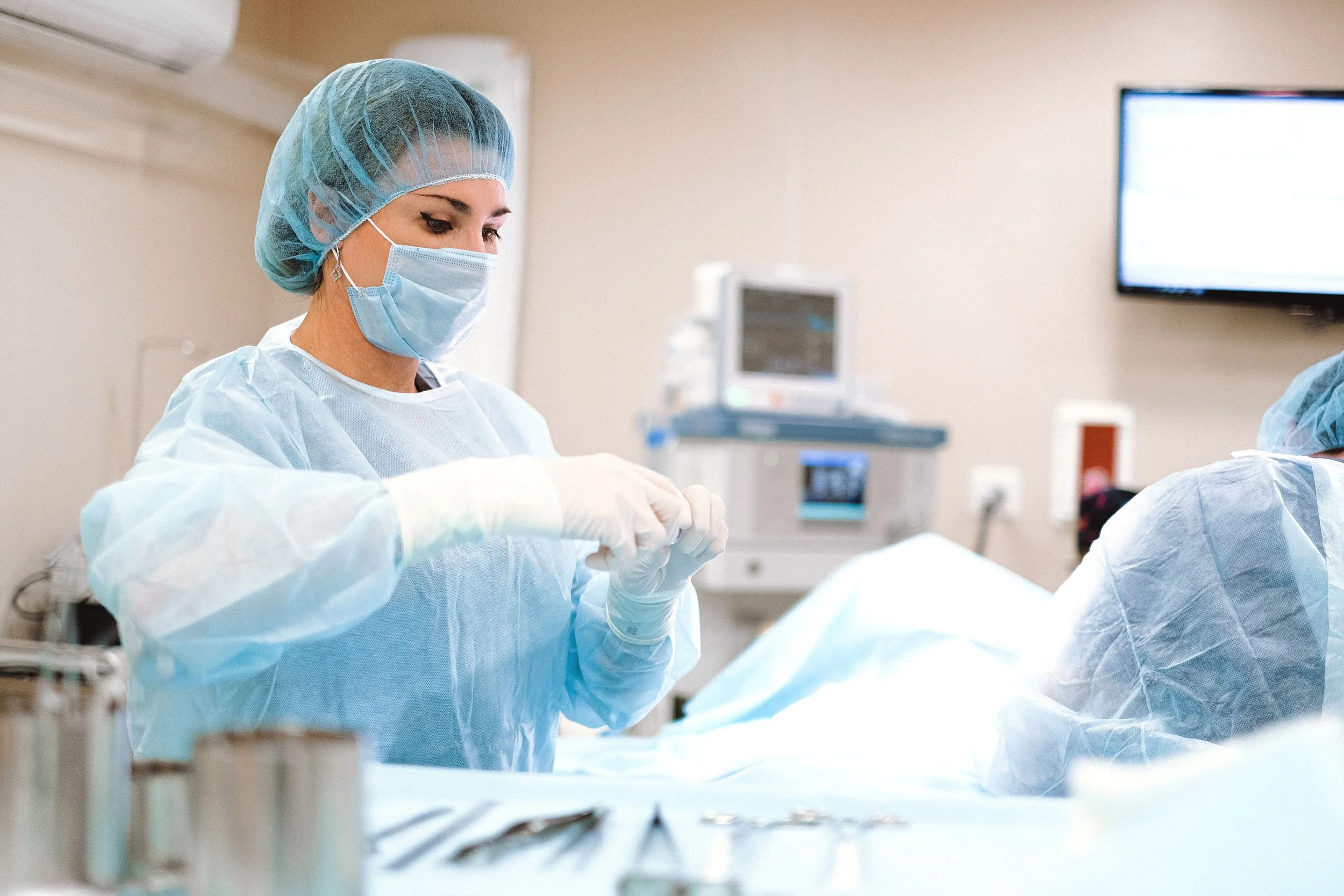
Shortly afterwards, the British Society for Gynaecological Endoscopy published an updated statement emphasising informed consent, patient choice, different pain-control options, the right to ask for a procedure to pause or stop and the importance of auditing pain and patient experience.
Pictured: Female doctor in scrubs with a patient on an operating table and equipment in the background. Source: Pexels.
I don't want to suggest a direct causal relationship between one article and a professional statement. Taken together, however, they illustrate something I think menstrual and gynaecological healthcare increasingly needs to address.
Because we have spent years saying – please, believe our pain. But belief is only part of the problem.
We also need to look at the systems that repeatedly allow pain to become normalised. Language can quietly contribute to that. Terms such as routine, common, minor and low complexity may make perfect sense when describing clinical processes, but they don't necessarily tell us anything about what those processes feel like inside someone's body.
Good to know:
Institutional descriptions can become more authoritative than embodied experience without anybody deliberately intending them to. Menstrual and gynaecological healthcare gives us plenty of examples where something being “common” has slipped surprisingly easily into something being considered normal enough not to investigate. That distinction matters.
6. Equitable Visibility: Who still isn’t being reached, or included?
There is one piece of research from August that received considerably less mainstream attention than luteal-phase TikTok or celebrity health stories, and I don't want that to mean it disappears.
Researchers at Heriot-Watt University worked with Deaf women who use British Sign Language and identified significant barriers to accessing and discussing menstrual health information in university and healthcare settings.
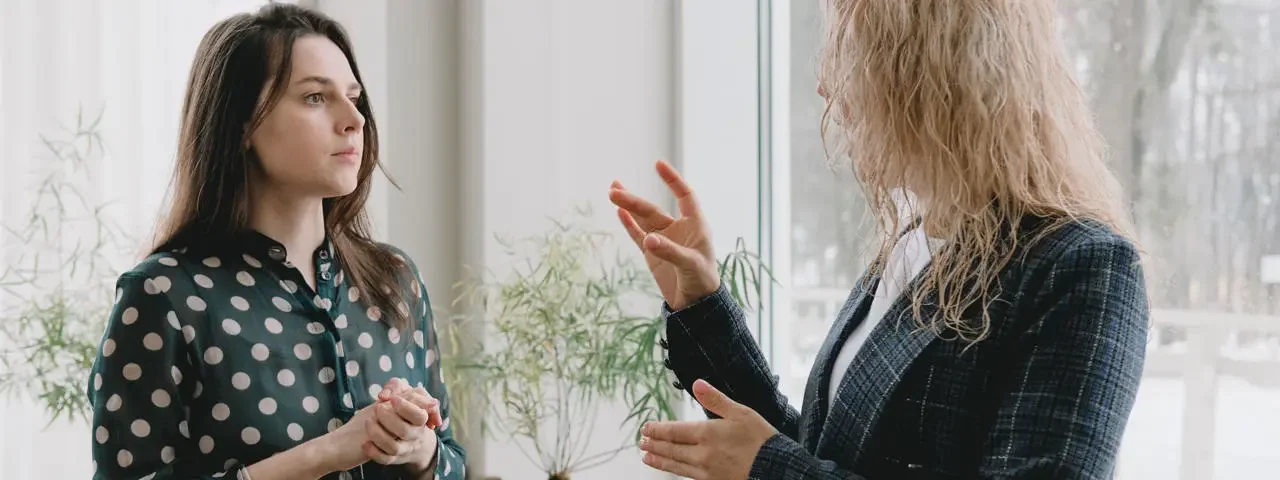
Through interviews and co-design workshops, the research highlighted problems created by systems built primarily around hearing forms of communication.
Pictured: A woman with brown hair and a woman with blonde hair communicate using British Sign Language. Source: Heriot-Watt University.
This matters beyond one study because when we talk about healthcare information being accessible, there is a tendency to design a mainstream service first and create an “accessible version” afterwards.
Sometimes that makes the most sense. But sometimes the problem is not the information itself, it is the system the information sits inside.
Good to know:
Visibility is not equitable simply because menstrual health is receiving more attention overall. We still need to ask who is represented, who can access emerging information, whose experiences generate the evidence and who is still expected to adapt themselves around systems that were never designed with them in mind. I'm keeping Equitable Visibility as a permanent part of this series for exactly that reason - because mainstream and universal are not the same thing.
The Bigger Pattern: What happens after awareness?
So what do luteal-phase TikTok, the British Army, PMDD documentaries, PMOS guidance, menstrual-fluid biobanks and hysteroscopy pain have in common?
Together, I think they show that menstrual health has reached a different stage.
We are moving beyond simply asking society to acknowledge that menstrual health exists and into a much more complicated period of deciding what happens next.
What happens when body literacy becomes commercially useful? How do we research menstrual bodies without recreating extractive relationships with them? And how do we make sure that all this new knowledge and visibility actually result in better lives for the people whose bodies we are talking about?
There isn't a neat way to control where mainstreaming goes from here - once knowledge enters culture it gets interpreted, adopted, commercialised, challenged, politicised and occasionally distorted. As a result, we are going to see innovation and questionable ideas existing alongside each other.
With that in mind - this summer still gives me a lot of hope because some of that movement is clearly happening. Menstrual health is no longer only being discussed by campaigners, specialist practitioners and people directly affected – that is significant.
It also means those of us working in this space need to become interested in more than whether menstrual health is visible. We need to notice who is adopting what, where the funding goes, what gets commercialised and whose knowledge is valued.
Ultimately – does greater attention actually transfer power back towards the people we are talking about?
Thanks for reading and I’ll see you in a few months for the next one,
Paige
If this kind of analysis is useful, I’d love to know what you think.
What have you noticed shifting in menstrual health recently? What feels promising, frustrating or overlooked?
Feel free to drop me an email, and follow me on Linked In for more reflections on menstrual health in the mainstream, including regular roundups on research, policy, culture, workplaces and care.
You can also subscribe to my newsletter for deeper updates and analysis.
Explore my work:
hello@flowwithpaige.com
